
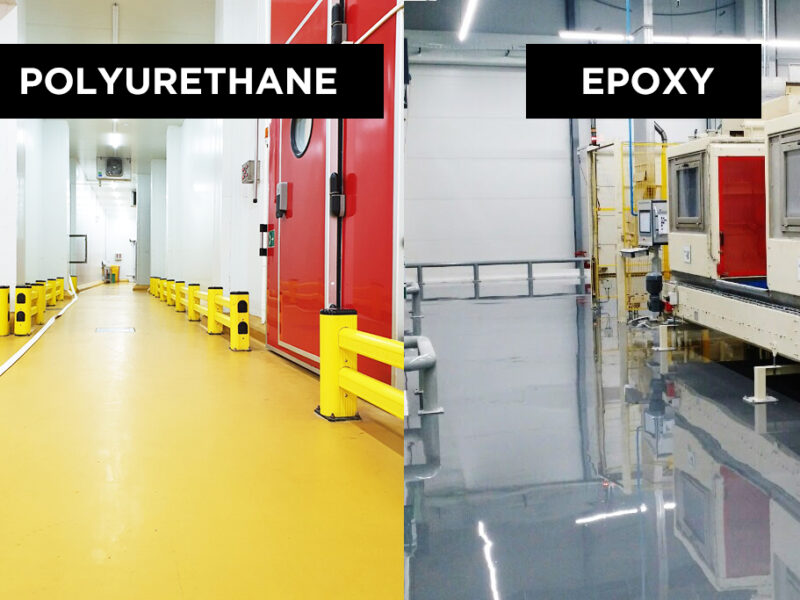
Introduction
In the world of industrial coatings, two names stand out as the most widely used and trusted solutions: Epoxy coatings and Polyurethane (PU) coatings. Both offer excellent protection against corrosion, wear, and environmental stress, but they are designed for different performance requirements. Choosing between PU and epoxy is not just a technical decision—it’s an investment in safety, durability, and long-term savings.
This article compares epoxy and PU coatings in terms of properties, applications, advantages, and limitations, helping industries select the right coating system for their projects.
Why the Choice Matters
Industrial assets are constantly exposed to:
- Harsh chemicals and solvents
- High humidity and water exposure
- UV rays and weathering
- Mechanical abrasion and impact
- Extreme temperatures
Selecting the right coating ensures longer equipment life, reduced downtime, and lower maintenance costs, while the wrong choice can result in premature failures and financial losses.
Epoxy Coatings: Strength, Adhesion, and Corrosion Resistance
Key Properties of Epoxy Coatings
- Excellent adhesion to steel, concrete, and other substrates
- Superior chemical resistance, especially to oils, acids, and solvents
- High durability against abrasion and mechanical stress
- Effective corrosion barrier, preventing moisture and oxygen penetration
Common Applications
- Pipelines and refineries
- Storage tanks
- Structural steel and bridges
- Petrochemical and pharmaceutical plants
- Flooring in warehouses and factories
Advantages of Epoxy
- Ideal for corrosive and chemical-heavy environments
- Cost-effective long-term protection
- Strong substrate bonding reduces coating failures
Limitations of Epoxy
- Poor UV resistance — tends to chalk and fade outdoors
- Less flexibility compared to PU coatings
- Requires a topcoat for aesthetics and outdoor durability
Polyurethane (PU) Coatings: Gloss, Flexibility, and UV Resistance
Key Properties of PU Coatings
- High gloss and color retention, even under sunlight
- Excellent UV and weather resistance
- Good flexibility, making it resistant to cracking
- Strong abrasion resistance for heavy-duty use
Common Applications
- Automobiles and machinery
- Outdoor architectural steel
- Storage tanks exposed to sunlight
- Decorative yet durable finishes for visible assets
Advantages of PU
- Perfect for outdoor exposure and UV protection
- Maintains aesthetic appeal with long-lasting gloss and color stability
- Strong abrasion and impact resistance
Limitations of PU
- Higher material cost compared to epoxy
- Less chemical resistance than epoxy
- Usually applied as a topcoat over epoxy primers for maximum protection
PU vs Epoxy Coatings: Head-to-Head Comparison
| Feature | Epoxy Coatings | PU Coatings |
| Adhesion | Excellent | Good |
| Chemical Resistance | Superior | Moderate |
| UV Resistance | Poor | Excellent |
| Gloss & Aesthetics | Moderate | High |
| Flexibility | Low | High |
| Abrasion Resistance | High | Very High |
| Cost | Lower | Higher |
| Best Use Case | Indoor, corrosive, chemical-heavy environments | Outdoor, aesthetic, UV-exposed assets |
Choosing the Right Coating for Your Industry
When deciding between epoxy and PU coatings, consider the following:
- Operating Environment
- For corrosive chemical plants, refineries, and pipelines, epoxy is the go-to solution.
- For outdoor structures and visible assets exposed to sunlight, PU offers superior performance.
- For corrosive chemical plants, refineries, and pipelines, epoxy is the go-to solution.
- Durability vs Aesthetics
- Epoxy provides toughness and chemical protection, while PU ensures aesthetic durability.
- Epoxy provides toughness and chemical protection, while PU ensures aesthetic durability.
- Budget
- Epoxy systems are usually more cost-effective.
- PU, while more expensive, delivers long-term aesthetic and weathering benefits.
- Epoxy systems are usually more cost-effective.
- Combination Approach
- Many industries use a hybrid system: epoxy primer for adhesion and chemical resistance, followed by PU topcoat for UV and weather protection.
- Many industries use a hybrid system: epoxy primer for adhesion and chemical resistance, followed by PU topcoat for UV and weather protection.
Why Partner with Gurudev Paints?
At Gurudev Paints, we provide customized epoxy and PU coating solutions designed to meet the toughest industrial requirements. Our products are:
- Tested under 96-hour salt spray conditions with zero rust formation
- Available in epoxy primers, epoxy DTM, PU topcoats, and high-performance hybrids
- Trusted across refineries, structural steel projects, automotive industries, and chemical plants
- Backed by technical expertise to recommend the best system for your project
By combining innovation with performance, Gurudev Paints ensures your assets remain protected, durable, and cost-efficient.
Conclusion
Both epoxy and PU coatings play a vital role in industrial protection. Epoxy excels in chemical resistance and adhesion, making it ideal for harsh environments, while PU offers aesthetic durability and UV resistance, perfect for outdoor applications.
The right choice depends on your industry’s needs—but often, the best solution is a combination of both. By choosing a trusted partner like Gurudev Paints, industries can achieve maximum protection, long-term savings, and peace of mind.